Tag

across

Browsing

Your car’s air conditioning provides essential comfort. Driving pleasure increases greatly with cool air. A complex thermodynamic cycle operates constantly. The AC compressor acts as the system’s heart. It circulates a vital refrigerant fluid always. This special fluid undergoes constant changes. Pressure rises significantly within the compressor. Temperature also climbs quickly there. Heat removes from the passenger cabin interior. Cool air then constantly flows inside the car. Understanding this intricate system proves essential. Proper maintenance extends component operating life. 

Regular checks prevent big troubles from developing. Diesel Performance Specialist offers expert service solutions. Their skilled team ensures peak efficiency. Trust them for reliable and consistent cooling performance. Learn about this critical automotive function. This knowledge empowers car owners significantly. Enjoy every journey fully and comfortably. A well-maintained AC performs optimally always. It keeps you refreshed on long drives. This system makes travel enjoyable always.

The Compressor’s Core Function

The AC compressor is your car system’s core. It acts as a powerful mechanical pump. Its pressure rises dramatically and sharply. The temperature also climbs significantly upwards. This hot high-pressure gas exits the unit. This initiates the entire vehicle cooling process. Without this critical component no AC. A healthy compressor means consistent comfort. Strange noises demand immediate professional attention. Prompt repairs prevent major system damage. Diesel Performance Specialist thoroughly inspects all compressors. They accurately diagnose every potential problem. This ensures optimal AC performance efficiency. Prevent future system failures completely. Enjoy reliable vehicle cooling year-round. Consistent care extends unit lifespan.

The Condenser and Receiver Dryer

Hot high-pressure gas exits the compressor quickly, and systems maintained by Diesel AC Repair in Rocklin, CA ensure this process operates efficiently. It immediately flows to the condenser unit. Ambient air passes over its external fins, allowing heat to transfer effectively to the outside. The hot refrigerant cools down quickly and changes state into a liquid form. This high-pressure liquid then forms steadily and travels onward promptly to the receiver dryer component. 

Expansion and Evaporation

The high-pressure liquid leaves the dryer unit. It reaches the crucial expansion valve next. This valve carefully meters refrigerant flow. It creates a sudden pressure restriction. Pressure drops dramatically at this precise point. The refrigerant temperature plummets instantly downwards. This super-cool fluid enters the evaporator. The evaporator resides deep inside the cabin. It resembles another small internal radiator. Warm humid cabin air blows across it. The cold refrigerant absorbs this ambient heat. It removes excess air humidity also. Proper function ensures continuous comfort. 

The Thermodynamic Loop Continues

The cold low-pressure gas exits the evaporator. It then travels directly back to the compressor. This completes one full cycle journey. The entire process then starts anew quickly. This continuous thermodynamic loop functions. It efficiently removes heat from inside air. Warmth transfers consistently to outside air. The passenger cabin stays very cool. Core thermodynamic principles govern this. Each part serves a unique specific purpose.

I’ve worked with diesel equipment long enough to know that when your fuel system fails, everything grinds to a halt. I’ve seen gelled fuel sideline fleets, injector issues cripple performance, and filter ice-ups turn into repair nightmares. That’s why I always recommend using additives that are built for real conditions, not just claims on a label. I don’t suggest anything unless it’s been proven across time, mileage, and situations that actually matter.

I look for a few things when I make my recommendations. First, I want a full range of protection—not just a quick fix. Second, I want additives that are safe to use in any type of diesel setup. And third, I only talk about brands that stand behind their products with solid guarantees and no nonsense.

What you’ll get below is my take on a company that’s been doing it longer than most, with products that cover everything from winter rescue to year-round maintenance. If you’re tired of buying different additives for every little issue, this will help simplify your approach.

Why I Recommend Howes

Howes is a name I bring up often because they’ve proven themselves where it counts. Their line of diesel fuel additives has been used across industries—trucking, farming, commercial fleets—for decades. They’re not chasing buzzwords. They’ve built a product line based on reliability and performance under tough conditions.

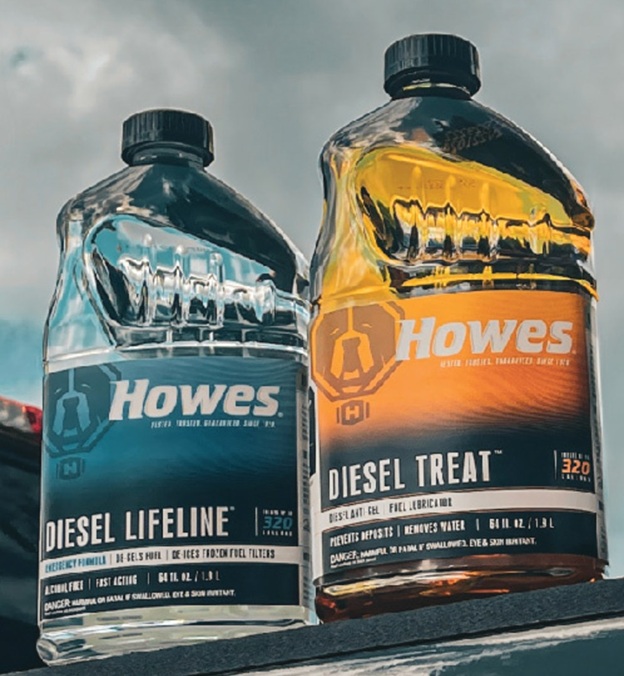
If you’re looking for a cold-weather fix, I always point people to Howes Diesel Lifeline. This stuff is built specifically for emergencies. It melts gelled diesel and de-ices fuel filters fast. You don’t need to mix anything. You don’t even have to replace the filter. It’s safe, petroleum-based, and works directly in your system without damaging components. Temperatures down to -35°F? Covered.

Now, if you’re trying to avoid that kind of emergency in the first place, their Diesel Treat is the one to look at. It’s their most recognized product for a reason. This is your daily driver for winter protection. It prevents gelling, removes water, adds lubricity, and cuts down emissions. It’s alcohol-free, solvent-free, and it’s safe for diesel, biodiesel, and even home heating oil. I’ve talked to fleet managers who won’t run a tank without it.

For Deep Cleaning and Injector Protection

Let’s say you’re more focused on performance and long-term fuel system health. That’s where Diesel Defender comes in. It’s a dual-purpose additive that cleans injectors and boosts lubricity by 2.5x compared to standard additives. It uses a powerful detergent formula to clear out internal injector deposits, even the ones that most cleaners miss.

You’ll usually see better fuel economy within three treatments. It’s also great if your engine’s been showing signs of hesitation or if emissions are creeping up. I’ve seen engines run smoother and more responsive after consistent use. And because it’s emissions-system safe, there’s no risk of damaging sensitive components.

Stability for Storage and Off-Season Use

If you’re storing fuel or using equipment seasonally, you need a stabilizer that actually works. Meaner Power Kleaner is their answer to that. It keeps stored fuel from breaking down and forming sludge or microbial growth. Plus, it has the same IDX4 detergent for full-system cleaning, making it a solid year-round option for heavy equipment, agriculture, or even marine use.

The difference is in how much it treats. It’s a concentrated formula, so a little goes a long way. I’ve recommended it to clients who run backup generators, seasonal rigs, or bulk fuel tanks. It keeps things clean and ready to go when you need them.

What Sets Howes Apart

One of the things I respect about Howes is how consistent they are. They don’t pad their product line with unnecessary variations. Each product has a specific use, and they cover the core needs better than most. Their additives don’t rely on gimmicks. They’re alcohol-free, solvent-free, and made to perform under real-world conditions.

They also back their products with a full money-back guarantee. That includes things like their Winter Tow Guarantee, which offers reimbursement if Diesel Treat fails to prevent gelling. I don’t see many companies willing to stand behind their product like that.

Their focus on system-wide care—from injectors to fuel lines to filters—means you’re not just addressing one issue at a time. You’re treating your entire fuel system in a way that’s preventative, not just reactive. That’s a big deal if you’re running equipment in extreme climates or under heavy loads.

My Advice to You

If you’re still grabbing whatever additive’s on sale at the truck stop, it’s time to think bigger. I’ve seen too many engines damaged by bad fuel and poor maintenance. Howes offers a solution that’s built for people who rely on their diesel equipment every day. Whether you need to rescue a frozen tank or just want a better-performing engine, they’ve got you covered.

Stick with a company that’s built its reputation over a century of field use. You’ll save money, avoid breakdowns, and get peace of mind that your engine’s running how it should.

Hauling a car across state lines in Australia isn’t something you do every day — and it doesn’t come cheap. If you are purchasing a car across state lines or moving out of your current state, understanding how interstate car towing services rates are determined will save you a lot of headache and unexpected expenses.

Here’s a definitive, yet plain English, explanation of what factors determine your final towing bill — and how much it might set you back.

Average Price Range in Australia

The average cost of cars towing from state to state (across Australia) is between $400 to $1,500. The actual price you’ll pay will vary depending on a combination of distance, type of car, towing technique, and extras.

For example:

  • The shorter ones (less than 300 km) could be US$400 – $700.
  • Intermediate distances (300 – 800 km) typically vary from $700 – $1;000
  • Long hauls (over 800 km) can cost $1,500 or more

Do your due diligence and always compare interstate car towing services before you make your commitment.

What Factors Influence the Price of Pulling a Vehicle on the Highway?

  • Distance Matters Most

More money will be charged to you if your vehicle has to go further. That’s because of additional fuel, time, and labour. And finally, out of the way or hard to reach areas can end up costing extra because of detours or special routing.

  • Vehicle Size & Type

Different cars come with different price tags. Here’s a rough idea:

  • Compact or Midsize passenger cars – Base rates apply
  • 4WDs or SUVs – Around $100 – $200 extra
  • Luxury or sports – May want enclosed for protection

High-value vehicles, or those with low ground clearance, might require a little more care — and a higher equipment quote.

  • Towing Method Chosen

Two common methods are:

  • Open towing – More affordable, good for most vehicles
  • Captive towing – Significantly safer but costs up to 50% more

Car aficionados, as well as owners of unique or fragile vehicles, are the ones who make use of enclosed towing.

Special Conditions That Raise Prices

  • Car Condition

Does the car run okay? If not, figure on an extra $50 – $150 for winches, dollies, or labor.

Non-runners, wheels off vehicles, or issues with the steering of the car take more time — and add up to more charges.

  • Timing & Flexibility

Do you require the automobile to be picked up immediately or sent in a hurry? You’ll likely pay a premium. On the other hand, if you are flexible, you can save money — some companies offer discounts on group transport for trips that aren’t time sensitive.

If you can settle for terminal-to-terminal drop-off, as opposed to door-to-door, you may be able to reduce your expense as well.

  • Extras & Insurance

Basic insurance is typically included for most companies, but if you’re shipping a high-end car, you might want extra cover. Options such as GPS tracking, after-hours service, or temporary storage drive the total cost up even more.

How to Save on Towing Fees

  • Book in advance for better pricing and to skip the rush fees
  • Stay away from the holidays where towing is in high demand
  • Consider open towing if your car doesn’t require extra protection
  • Be open with your pickup/drop-off times
  • Always compare interstate car towing services. It always pays to take the time to compare auto towing services.

Tech & Skill Matters

Long-distance cars towing often requires specialised equipment and personnel, not to mention for cars such as delicate, expensive, or modified ones. That’s why selecting the right company is so important.

The good news is that one of the most respected names in this sector is Motorsport Towing, they have a proven record with secured, on time, and reliable car transport nationwide.

Final Word

There are a few moving parts — both figuratively and financially — to towing a car interstate in Australia. From how far you’re moving the car to the kind of car it is, and exactly when it needs to be moved, every detail affects your final cost.

With the right provider, and a little bit of smart planning and flexibility, towing your car across state lines doesn’t have to be a big headache.

I’ve worked with businesses that rely heavily on website performance to generate leads and build credibility. The automotive and blue-collar industries, in particular, need something more than just a clean design. They need functionality, clarity, and a strategy behind every digital element. I’ve seen the difference a specialized agency can make. That’s why I’m pointing you toward a company that’s not just technically skilled but also understands your industry.

How I Made My Decision

When I evaluate service providers, I look at a few key things. First is their understanding of the industry they serve. Next is the quality of their work and how well it aligns with practical business goals. Finally, I look at their results and consistency across projects. Montarev stood out in every category. Their approach is tailored, not generic. They know exactly how to build solutions that work for blue-collar and automotive businesses.

What You’ll Learn in This Article

I’ll explain why Montarev is a smart choice if you’re planning to invest in a new website or looking to improve your current one. I’ll walk you through how their work reflects real industry needs, how their marketing strategies can support your growth, and what makes them different from other agencies out there. If you stick with me, you’ll come away with a clear direction on who to trust and why.

Why Website Design Needs to Be Industry-Specific

You already know that a generic site won’t cut it. Automotive businesses deal with very different customers and sales cycles compared to tech companies or restaurants. The layout, structure, and flow of your website need to reflect the kind of clients you want to attract. If your design feels off or your site is too slow, people move on. That’s where a company like Montarev comes in. They focus on automotive website design, and from what I’ve seen, that’s not just a service offering, it’s a core strength. They don’t treat this industry as an afterthought. They’ve built their business around it. That means the choices they make during the design process are based on experience, not guesswork. They know what kind of calls to action convert. They know what potential buyers are looking for. That insight matters.

Montarev Understands the Automotive and Blue-Collar Space

Montarev’s founders didn’t just study marketing, they lived the industry. That’s something I appreciate. They understand the mechanics of the work, the sales process, and what kinds of visuals and messaging actually land with working-class clients. That’s not something you can fake. Their design work doesn’t just look good, it functions with a purpose. It’s built to convert visitors, showcase expertise, and guide potential customers toward action. Whether you’re running a body shop, a repair service, or a parts business, the needs are different from a retail brand. Montarev’s work reflects that.

The Benefit of Their Marketing Services

Beyond design, Montarev also handles digital campaigns through Google, social platforms, and more. Their strength is not in pushing services you don’t need, but in crafting strategies that are specific to what your business goals are. I’ve noticed how they use data, local targeting, and proven ad formats to generate results without waste. Their campaigns are tight and focused. Their photo and video work also gives companies a way to present themselves professionally without looking staged or forced. That’s key for credibility, especially in blue-collar industries where trust plays a big role in buying decisions.

Why I Recommend Them Over Other Options

Most agencies can build a website. Some can even manage ad campaigns. But very few combine practical industry knowledge, design skills, and marketing execution in one package. That’s why I recommend Montarev. They’re a full-service solution that works specifically for businesses like yours. They also move quickly. If you’ve ever worked with agencies that drag their feet or hide pricing behind phone calls and pitches, you’ll appreciate how Montarev operates. They’re transparent, responsive, and clear about what they offer.

What You Should Do Next

If your current website isn’t converting, or you’ve outgrown a template-built page, it’s time to look at a proper redesign. And not just any redesign. One that’s grounded in the needs of your customers and your business model. I wouldn’t waste time with generalists. If you’re serious about growth and want a digital presence that actually supports your business goals, Montarev is a solid move. Their team has built a reputation on results. If you need a dependable partner who understands your world and can give you a site that reflects it, they’re worth your attention.  

Introduction

In current years, city spaces across the earth have experienced a surge in cycling as a favorite mode of conveyance. The reasons are multifaceted: it is environmental, promotes tangible health, and often saves occasion compared to additional forms of urban travel. As centers evolve to shelter this shift, a fascinating development is emerging—smart bike racks.

These creative structures are in addition just a place to park your bike; they represent an assemblage of technology, sustainability, and usefulness. Let us delve into the interesting world of smart bike racks and explore how they are reshaping urban mobility.

What Are Smart Bike Racks?

Smart bike racks are the complicated counterparts of established bike parking systems. They incorporate state-of-the-art technology to determine enhanced freedom, better integration accompanying urban infrastructure, and a convenient experience.

Equipped with accompanying features like real-time chance tracking, digital locking mechanisms, and smartphone integration, these racks are background new standards for city bike parking.

Key Features of Smart Bike Racks

1. Security Enhancements:

Many smart bike racks come with joined locking systems that may be controlled via a smartphone app, adjoining an extra layer of protection for users.

2. User Authentication:

Some smart racks demand user confirmation, ensuring that only registered consumers can access the rack.

3. Real-Time Availability:

Through affiliated apps, cyclists can check the availability of bike parking spots in real time, saving opportunities and reducing disappointment.

4. Data Collection:

These racks often collect data on usage patterns, helping city planners make cognizant decisions about moving infrastructure.

5. Solar Power:

Many smart bike racks are equipped with accompanying solar panels, making them energy-effective and eco-friendly.

How Smart Bike Racks Work

The movement of smart bike racks involves a combination of fittings and software. Here is a tighter look at how they function:

1. Hardware Components

Locking Mechanism:

These are smart locks that can secure a bike using extraordinary identifiers, often activated by way of a mobile app.

Sensors:

Smart racks are outfitted with differing sensors that detect when a bike is stationed or removed, allowing real-time revises on rack availability.

Solar Panels:

These panels harness solar energy to power the rack’s science, minimizing the incidental footprint.

Surveillance Cameras:

Some racks come with included cameras for added safety and deterrence against stealing.

2. Software Infrastructure

Mobile Applications:

Users interact with accompanying smart bike racks primarily through dedicated movable apps. These apps provide features such as rack reservations, real-occasion availability checks, and consumer authentication.

Cloud Connectivity:

Smart racks are connected to the cloud, where data on custom patterns and environmental environments are stored and resolved.

Data Analytics:

The collected data is treated using progressive analytics forms, providing insights for city planners and rack operators.

How Smart Bike Racks Benefit Urban Environments

1. Enhanced Security

Traditional bike racks, while useful, frequently fall short in agreements of security. The progressive locking mechanisms in smart bike racks considerably reduce the risk of stealing.

In addition, many smart racks are equipped with cameras and alert systems that inform users of some tampering attempts. This enhanced protection not only protects bicycles but also encourages more population to cycle, aware their bikes are safe.

2. Improved Urban Planning

Smart bike racks support valuable data on bike usage, which can advise urban preparation decisions. By understanding where and when people are utilizing bikes, city planners can design better cycling foundations and allocate resources more capably.

This data-compelled approach leads to more bike-friendly downtowns and can encourage more family to adopt cycling as their basic means of conveyance.

3. Sustainability and Reduced Traffic Congestion

As more individuals choose cycling over driving, cities can experience a decrease in traffic tie-ups and pollution. Smart bike racks play a critical role in this transition by making bicycles more convenient and approachable. Furthermore, the availability of integrated e-bike charging stations supports the use of electric bicycles, further bright sustainable transport selections.

The User Experience: A Seamless Journey

One of the most important advantages of smart bike racks is the seamless consumer experience they offer. Here is how a typical interaction might unravel:

1. Locating a Rack:

Using an integrated app, riders can find the most forthcoming available smart bike rack.

2. Reservation:

Some schemes allow consumers to reserve a spot in advance, guaranteeing there is a place for their bike upon meeting.

3. Securing the Bike:

Upon reaching the rack, the user can lock their bike fixedly using a digital lock controlled by their smartphone.

4. Retrieval:

When the consumer returns, they simply solve their bike with a tap of their phone, making the complete process quick and hassle-free.

The Challenges and Considerations

While smart bike racks present many benefits, their implementation is not without challenges. Here are a few concerns that cities and companies must address:

1. Cost and Infrastructure

Implementing smart bike racks may be costly, needing significant primary investment and foundation upgrades. Funding these projects often includes collaboration between public and private subdivisions, demanding cautious planning and distribution of resources.

2. Technology Integration

Ensuring the science in smart bike racks is compatible with existent systems and different urban foundation is crucial. This includes selecting the right software platforms and guaranteeing they are user-friendly and trustworthy.

3. Maintenance and Security

While smart bike racks improve protection, they are not immune to vandalism or malfunction. Regular maintenance and revises are essential to guarantee smooth operation and to maintain the technology current.

The Future of Smart Bike Racks

1. Solar-Powered Charging:

To make the racks truly tenable, integrating solar panels could provide strength for e-bike charging and added functions.

2. Biometric Access:

Advanced security features like fingerprint or facial acknowledgment could further improve security and consumer convenience.

3. Augmented Reality Integration:

Imagine utilizing an AR app to visualize parking options and chance, adding a tier of interaction and date.

Conclusion: A Smart Solution for Modern Cities

Smart bike racks represent an irresistible solution to various urban challenges. They enhance freedom, provide priceless data for city development, and help sustainable transportation. As capitals around the globe grapple with issues like congestion and pollution, smart bike racks offer a glimpse into a future where cycling is not just a recreational exercise but a cornerstone of urban mobility.

Regularly cleaning a leather motorcycle jacket is an important method to keeping it searching its best. Leather suites, boots, pants and jackets might cost a large amount, it is therefore worth somewhat more hours to help take proper care of the gorgeous finish. A larger-quality leather jacket can certainly begin to dry up and crack when the proper care is not provided. The particular manner of cleaning and conditioning the motorcycle gear may not be hard. Plus, the jackets which are well-maintained are usually supple which ensures they are simple to use and far simpler to utilize and take. A perfect time-frame to wash the leather motorcycle jacket is every three or four a few days.

What’s involved in the cleaning process?

Initial cleaning

Just before beginning the cleaning process, you need to choose a convenient place to secure your leathers. Use a coat hanger and make certain there’s enough space to operate. Start the cleaning process obtaining a bowl of hot soapy water. Avoid harsh detergents or dish cleaning liquid, and rather use a gentle soap much like a baby shower celebration gel. Give you the jacket a great wipe lower having a microfiber cloth or much like ensure it’s totally clean.

Leave to dry

When the jacket is fully as well as all symptoms of dirt are really removed, get forced out in a open place to air dry. Avoid a clothes dryer, blow dryer or any other heated appliance to quicken things. Heating leather based clothes can increase the chance of the fabric shrinking, splitting or cracking.

Once the jacket is dry, you are to begin across the conditioning step. It will always be imperative that you complete the initial cleaning to get rid of the dirt. In case you go to conditioning, there’s the chance of trapping the dirt create a quite atrocious look.

Apply conditioner

Apply a top quality leather conditioner that just absorbs towards the leather to make certain it’ll its job well while offering extended-term protection. Massage most likely probably the most well-loved conditioner all around the jacket with your hands or maybe a dry cloth. Give you the seams and stitching special attention because these areas are usually prone to cracking or rotting later on. Transporting out a great coating may be used, leave the jacket overnight to dry. Initially the leather material may feel somewhat greasy, however, if the conditioner is fully absorbed, it has to look wonderful.